
.png?width=542&height=179&name=PNG-Averitt%2055%20Years%20RED%20ODFIP%20(1).png)


If you have international shipments moving from Asia to the U.S., conditions in the Transpacific Eastbound (TPEB) market have changed significantly in recent weeks. Space is tight, rates are climbing, and the window to act is narrowing.
Rich Egan, Averitt's VP of International Solutions, put it plainly:
"Market conditions have shifted rapidly, and Transpacific Eastbound ocean capacity is already heavily booked, with many carriers full through mid-to-late June."
Capacity Has Tightened Fast
Carriers are actively pulling capacity from the market to support rate increases. According to Drewry's World Container Index, eight blank sailings were announced on the Transpacific trade route in a single week in late May, a signal that carriers intend to hold firm on rates rather than compete for volume.
The impact is showing up in rollover rates. As Egan noted, "Rollover situations are becoming increasingly common. Depending on the carrier and service lane, current rollover levels are estimated to be in the range of 30% to 60%."
Rates Are Moving Up, and GRI's Are Holding
Spot rates on the Transpacific climbed again in late May, with Shanghai to New York rising 6% to $4,597 per 40-foot container and Shanghai to Los Angeles increasing 3% to $3,473 per 40-foot container, according to Drewry.
June 1 General Rate Increases (GRI) are confirmed to be holding. According to Egan, "We expect pricing on both the U.S. East Coast and West Coast to increase by approximately 30% to 45% compared to May 15 spot market levels."
Peak Season Surcharges are being layered on top of those increases. Ocean Network Express announced a PSS of $2,000 per 40-foot container on Transpacific Eastbound cargo, effective June 1. Freightos reported in its May 19 market update that daily rates on Transpacific lanes were already climbing heading into the final weeks of May, with carrier capacity actions pointing toward further escalation.

What Is Driving This
Several forces are converging at once.
The U.S.-China tariff truce announced in May 2026 triggered a significant wave of front-loading as importers rushed to bring inventory in during the 90-day window. That demand surge is hitting faster and sharper than a normal pre-peak ramp-up, compressing Q3 volume into May and June.
Drewry notes that peak season is arriving earlier than usual this year, with demand being pulled forward ahead of an expected July 1 bunker fuel adjustment, and expects further upward pressure on rates in the coming weeks.
Egan confirmed the conditions are broad-based: "Both USEC and USWC services are experiencing significant capacity constraints. Carriers are maintaining firm rate levels as space remains extremely tight throughout the market."
What This Means for Your Shipments
Advance booking is no longer a best practice. It is a necessity.
Egan's recommendation is direct:
"Place bookings as far in advance as possible. Advance planning should be treated as a priority to secure the best available options for upcoming ocean freight shipments."
Shippers who wait face the risk of absorbing spot market pricing at its highest levels, rolling bookings, and disrupted timelines during a period when supply chain performance matters most.
The Ripple Effect: Warehousing, Truckload, and LTL
The pressure does not stop at the port. When ocean capacity tightens and front-loading accelerates, the downstream supply chain feels it too.
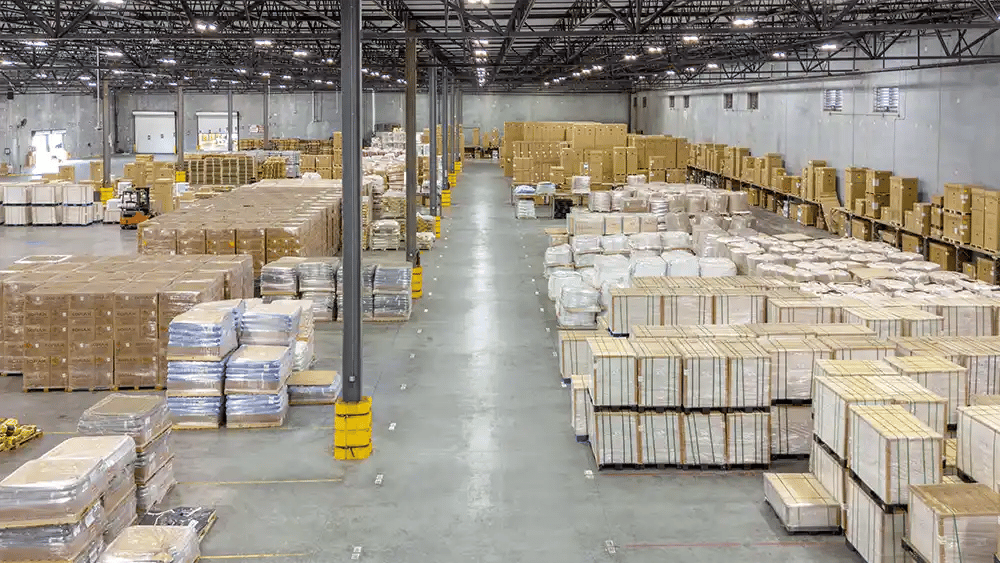
Warehouse space near major East and Gulf Coast gateways — Savannah, Houston, Charleston, Mobile, Jacksonville, and Norfolk — will become increasingly competitive as import volumes surge ahead of peak season. Shippers who do not have storage secured in advance may find themselves competing for limited space at elevated rates, or holding containers at port longer than planned and absorbing demurrage costs in the process.
Truckload and LTL capacity near those same gateways tends to tighten in lockstep with import surges, as drayage demand spikes and freight moves inland in concentrated windows.
How Averitt Can Help
Averitt's International Solutions team is actively monitoring ocean market conditions and working with customers to secure capacity and manage surcharge exposure. But our support does not end at the port.
Averitt's Distribution and Fulfillment network operates across the South and Central U.S., with facilities positioned near key inland ports and intermodal hubs serving Louisville, Dallas, Memphis, and more. For shippers looking to move goods off the coast quickly and into storage close to their customer base, our warehousing and fulfillment capabilities are built for exactly that kind of integrated move. Combined with Averitt's LTL and Truckload services, we can help you manage the full journey from ocean arrival to final destination under one relationship.
Reach out to your Averitt representative or contact our International Solutions team to discuss your upcoming shipment needs.

Need International Assistance?
Contact our International Solutions team using the form below. We are here to help you navigate current market conditions and secure capacity for your upcoming shipments.