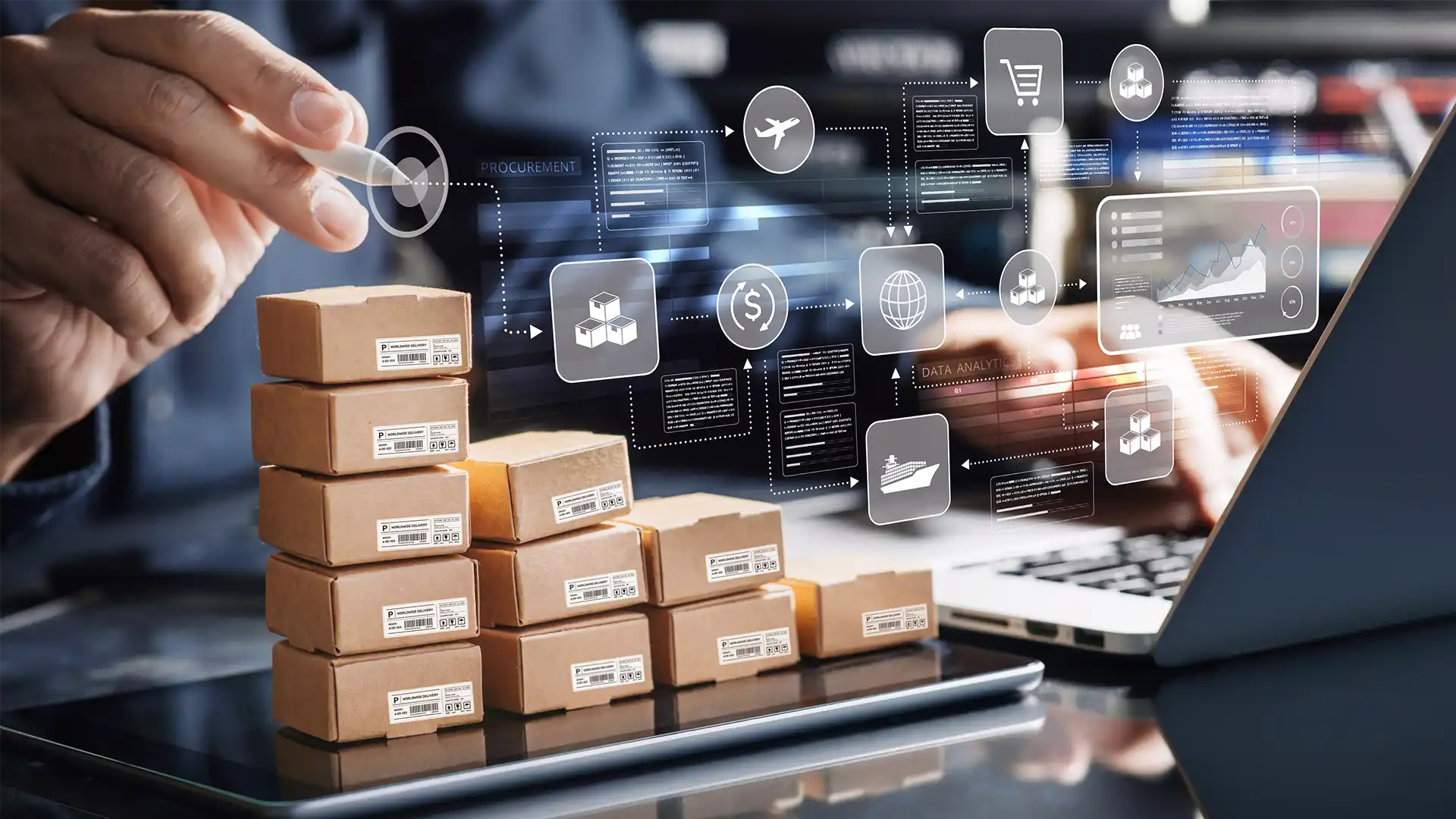
Welcome to Beyond Point to Point, the podcast where we go beyond pickup and delivery and dive deeper into the world of logistics, freight, and supply chain management. From industry trends to expert insights, we're here to help you navigate the complexities of modern shipping. Be sure to subscribe to Beyond Point to Point wherever you watch or listen to your favorite podcasts. And now here's your host, Joe Greek. Welcome back to Beyond Point to Point, the podcast where we explore the ideas, technology, people driving today's supply chains forward. In this episode, we're diving into how shipper technology and AI are reshaping the way freight decisions are made, from planning and pricing to execution. I'm joined by Russell Young to talk about how tools like Averitt Connect and ExactRate are helping shippers tap into that innovation and make smarter, faster choices across their networks. Russell, thank you again for being on the show. Yeah, no problem. Well, so today we're talking about transportation management systems. In the past, it used to be all about visibility and tracking. But over the years, that's become more of a critical tool for most shippers operations. Why do you think that has evolved over the most recent years? Well, I would say it's always been the TMS industry's goal to be critical in the decision making process. And I think the first few iterations of that, maybe, you know, first few generations of technology did like eighty percent of what they were trying to accomplish. And that was great at the time, but we've been living in that sort of eighty percent for a while now and introduced AI to the mix. And now the shippers and even carriers alike want more accurate information, want more accurate data so they can make better informed decisions. So I think that's the evolution. And when you add something like AI to this, there's sort of a rising tides effect across the board. There were spots where the technology could would say, you know, we probably can't get any more efficient or more accurate in that area without adding people to it or whatever, engineering the technology. With AI though, you sort of can rethink everything, you know, and so on the data entry side, on the quoting side, on the visibility side, on the invoice side, all those processes now you kind of reevaluate those and just raise the tide. So that's that's kind of the evolution. Think the the driving factor too is the shippers just said, I need more more accurate information so I can make precise, more precise decisions. And then carriers do the same thing, though, right? So carriers, you know, Averitt is, we're more precise in how we plan P and D routes today than ever before. Shuttle routes, What we need is the most accurate information from the shipper to be able to do that. And we need it as early as we can. So I think both sides kind of pushing that, is generating a real evolution in the TMS space to just be more accurate. But then also, no, not forgetting how many steps did it take me to get there, right? So accuracy and efficiency is kind of been the driving force. Well, you also head up Averitt Connect, which is our own TMS platform. How do you help shippers overcome the hesitancy to trust a carrier's TMS over something that would be, I guess, pitched as more independent? Yeah, it's a great question. I think maybe reframing what Averitt Connect is and isn't might be good here. I think one of the things we do want to offer it and we have trust is interesting, you know, something's too good to be true. It's always like, what's the motivation, right? So let's take a look at like what the motivation is for a company like Averitt to offer this. I think the the motivation is we have one hundred and fifty salespeople out there making really good relationships every day, and they do a great job of that. And we want to maintain those. So there's a level of, if you don't have to go somewhere else to find your technology, we can continue that and to maintain that relationship. That's one thing. But the other thing is just the general, accuracy and and and information that you're getting from, a tool like that. So our motivation is, if I can get you to use this tool, you can provide me better information, I can make better decisions on my side, all while you are making, you know, better decisions on your side. But reframing this to saying, we have no control over what the shipper does in the Averitt Connect. It's just a tool for them to make decisions. I mean, are there are two separate portals for Averitt Connect. One is what the shipper does in the system, and one is what the carrier can do in the system. What the carrier can do in the system is just kind of see general shipping information like I know you're shipping on a lane now that maybe you weren't before. The shipper is making all the decisions about carrier selection, all those sorts of decisions. So, you know, trust, understanding why we do it is important. And then just kind of show in, we just have to show that. So it's a carrier neutral platform, correct? It's not like Averitt can go in and say, our competitors rates are going to look higher. That's correct. There's no rate margining anywhere in the process. I would also say too, that there's virtually no difference between the My Carrier platform, the Averitt Connect platform and any of the other, you know, LTL companies, which most of them are use or have a version of this, a version of Averitt Connect, they call it something different. There's virtually no difference in that technology at all. So it's very carrier neutral. And, our shippers are being hit from all sides because all the LTL providers are offering that. So I think they're becoming more trustworthy, just understanding that, hey, this is kind of a technology that helps me into the future. So another hot topic in technology in the transportation industry is dynamic pricing. At Averitt, we have ExactRate. Could you explain what that is and how it leverages AI? Yes, so I think one of the things is understanding what dynamic pricing is. We may not have realized it, but we've been using dynamic pricing for years. Anytime you search for flights, you're using dynamic pricing. If you're searching for hotels, you're using dynamic my wife and I like to stay downtown Nashville every once in a while and we'll use some, know, hotel points. Well, if the Titans are in town, the Predators are in town, and Billy Joel's in town, and there's a huge convention in town, we can't afford to stay downtown. We are not downtown. So the pricing that comes back is premium. I could get a room, but I would have to leverage a few things to be able to do that. Conversely, if if those things are not happening downtown Nashville, the rates that I get back are lower because those hotels need occupancy. The same thing with the LTL rating and dynamic pricing in the LTL space. It's, if I have a full trailer going in a direction and you want to get on it, you're gonna probably have to pay a premium to get on it. If I have an empty trailer coming in a direction and you want to get on it, you're gonna be you're gonna get a better better rate. Either in either case, it allows Averitt to put our best rate and our best foot forward in both cases. Right? We need freight, you know, desperately on in one instance, and we don't need as much of it in the other. But if you want to get on both of those trucks, there's a price that you can pay to get on those and it's our best price that we can put in that time. So, you know, how it works is, know, there are a lot of complexities to that. But basically, it's taking our capacity, market conditions, our capacity, and specifically what the shipper is trying to ship at that given time, putting those together and getting giving giving a customer our best best price. So does ExactRate, does that play into Averitt Connect as well? Or are they two totally independent systems? They are totally different independent products, but they work really well together. So one of the reasons why we talk about them together is because if you're a shipper, a new shipper for us, and you want to get quoting and shipping as quickly as possible, the fastest way to do that is to sign you up for ExactRate, for dynamic pricing, and sign you up for Averitt Connect. Now all of a sudden, within twenty four hours, we can have you quoting and shipping on the platform with Averitt. So I think that's why they work so hand in hand together. The Averitt Connect platform uses APIs to call rates, and the fastest way for us to get rates into Averitt's system is to sign up a customer on ExactRate. And again, it's our best foot forward for that given time. Well for a shipper, what is the ultimate benefit of using a product like Averitt Connect plus ExactRate? Is it a time saver? Well, so in general, from an onboarding perspective, it's an incredible time saver. I think there are kind of two different benefits to both products. One, on the Averitt Connect side, it's really just efficiency and accuracy, like we talked about in the TMS space. One of the things that my carrier is really pushing is, can we have the most accurate rate presented upfront? And really, that's not about the carrier providing an accurate rate, that's really about the shipper providing accurate dimensions or characteristics to the freight. So if we know exactly what we're going to do, Averitt can provide a very accurate rate. So the general benefits are accuracy on the front end, accuracy of visibility throughout the process, accuracy in the invoice audit process and claims management, all of that, if that's as accurate as possible, that shippers got less manpower, you know, disputing invoices or chasing down carriers for where their shipments are. Then conversely, obviously, Averitt gets benefits of those same things. If you're not disputing invoices, we don't have to have a person, you know, manage that dispute process. So that's, you know, that's really kind of where the efficiencies of the TMS lie. On the ExactRate side, I think it's just the idea that I can get a rate quickly. You know, there's a lot of we have a lot of shippers in our network that just don't have a lot of volume leverage, right? They don't have a lot of, you know, give me a lower price, and I'll give you this additional freight. We treat them all the same on the ExactRate side, that shipment stands on its own merit. So we're going give you the best price we can give you for that shipment, not because of who you are or what you can offer us from an additional value perspective. Well, where do you see TMS and pricing technology within our industry going over the next few years? Well, that's a loaded question. I think it hasn't changed at all for years and years and years. And recently, we had some some changes to the NMFTA, which basically just trying to make this a little simpler, right? Consolidate some of these classes and move to a little bit more of a density based model, which ExactRate is, I think we're going to continue to go in that direction. Actually, I heard a presentation from a gentleman from the NMFTA this week about, you know, this was just a first pass, like we, it took us a long time to get to where we are, even in this past. So now, we're going to be moving forward, there's going to be more, more changes and more density based, you know, adjustments to the classification system. So as those things change, and we get closer to just full on density based, this is how much trailer space it takes up, this is how heavy it is, give me a price. I think that's really where we're going. I was at a carrier convention this week, and there was a lot of discussion about dynamic pricing. And so I think, you know, there's a lot of uncertainty about what it does and what it will do for the shipper and carrier community alike, but there's a lot of a lot of momentum behind it. And so I think good things are coming. So I think where are we going? Probably density based pricing, probably more dynamic based pricing, just like the hotel industry and the airlines have been doing for years. Technology wise, where do you see Averitt Connect going in the years, months ahead? Yeah, great question. So Averitt Connect is a white labeled version of the My Carrier technology. So My Carrier is making some major strides in investing in the accuracy of the data throughout the process. They're using things like AI to make the quoting process more accurate, and maybe inform the shipper that on this lane at this location, there have historically been liftgate charges. Might, they're not forcing it on them, but they're saying you might want to consider going ahead and clicking liftgate as part of your rate, so you're not surprised with the liftgate fee at the end. So they're really focusing on the accuracy, you know, we talked about accuracy and efficiency early, but the accuracy of the quote process, the accuracy of the dispatching process, the accuracy of the visibility, so that the invoice process and the payment process is incredibly accurate. The two I would say two of the big pain points for shippers are, you know, how do I get my rates and I'm bouncing around to get my rates and are they accurate? And then auditing invoices and disputing that. Those are also the same pain points that carriers have. And so they're really attacking that to make it as accurate as possible. So there's a lot of new tools. We'd love to show that to our customers. So again, out to your transportation specialist or reach out to me, and I'm happy to walk you through some of the new stuff. So if I'm a shipper and I want to sign up for Averitt Connect or ExactRate, what's the process? So the ExactRate is more of a, this is the kind of pricing that I work with my LTL sales rep on or my transportation specialist on to, you know, move over to ExactRate. And usually the transportation specialist is pushing that one way or the other depending on characteristics of freight, the kind of pricing we have in place today. On the Averitt Connect side, it's super simple, reach out to your transportation specialist and they can get you an invitation very quickly, username and password, get set up, make sure we've got some some stuff on Averitt side, working, and we'll get you rating and shipping immediately. You know, we'd love to provide demos, specific to your shipping situations. It's a really good tool for one, it's a complete quote to cash tool now. My carrier has done a lot of things on the rating side, invoice audit side, as well as you know, you can now pay your carriers through it if that's what you want to do. So you don't need freight audit and pay company, you don't need the additional people to do those sorts of things. So they've created this quote to cash system. And we'd love to sit down with you and show you a demo of how that works and how that can fit, you know, a specific shipper's needs. A lot of companies have multiple locations that's available as well, things like that. So there's some real neat benefits to the product and some really neat things coming too. They just launched an app and I'm super excited about that. So yeah, just get with your transportation specialist and we'll get you an invitation get you going quickly. That's great. Appreciate your time today, Russell. Yeah, of course. Thanks, Joe. Thanks for listening to Beyond Point to Point. To learn more about how Averitt Connect and ExactRate can help your team leverage technology and AI for better shipping decisions, visit averitt dot com slash technology.

.png?width=542&height=179&name=PNG-Averitt%2055%20Years%20RED%20ODFIP%20(1).png)