.png?width=542&height=179&name=PNG-Averitt%2055%20Years%20RED%20ODFIP%20(1).png)


The AI data center buildout is the largest infrastructure investment cycle in modern history. U.S. spending on data center construction starts reached an estimated $77.7 billion in 2025 according to Equipment World – a 190% year-over-year increase – and Moody's projects $3 trillion in global spending over the next five years to keep pace with AI capacity demand. With more than 2,788 data centers currently announced or under construction across the U.S., the pressure on every link in the supply chain – including logistics – has never been greater.
For manufacturers, facility owners, colocation providers, hyperscalers, and construction firms, the question isn't whether logistics is a challenge in these projects. It's whether your logistics partner is actually built to handle what these projects demand.
What Makes AI Data Center Logistics Different From Standard Freight?
AI data centers are not typical construction or technology projects. They combine the complexity of heavy industrial construction with the sensitivity of high-value IT deployment – and they do it under timeline pressure that leaves almost no margin for error.
According to JLL's 2026 Global Data Center Outlook, speed to power is now the primary criteria driving site selection decisions. That urgency flows directly into logistics. Equipment needs to arrive precisely when sites are ready – not before, not after. Generators, cooling systems, and structural components are oversized and overweight. Servers, GPUs, and networking equipment are extraordinarily high-value and sensitive. And active construction sites have security protocols, limited access windows, and unpredictable unload times that most carriers are not equipped to navigate.
The result is a logistics environment that demands capabilities well beyond a standard carrier relationship.
Why Warehousing and Staging Near Job Sites Is a Critical Capability
One of the most underestimated logistics challenges in AI data center projects is the gap between when equipment is ready to ship and when the site is ready to receive it.
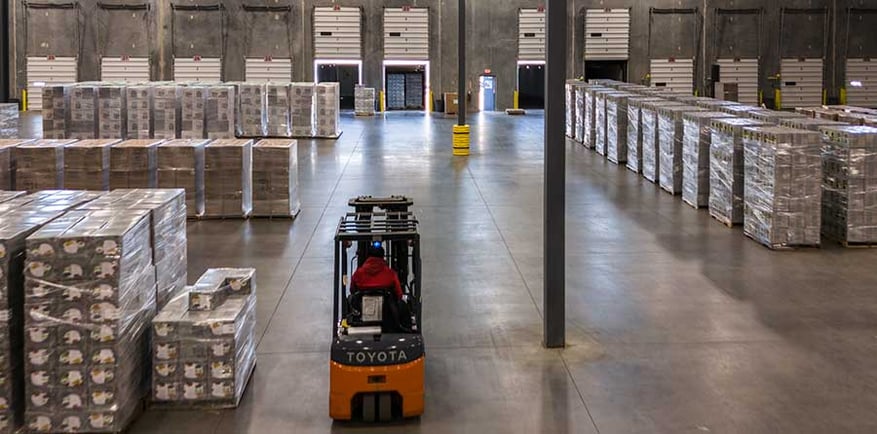
Construction sequencing, permitting timelines, and phased deployment schedules mean that high-value hardware – power infrastructure, cooling systems, racking, servers – frequently needs secure, accessible storage near the job site before it can be installed. Without a staging solution, that equipment either sits on a truck (expensive and risky) or arrives at the wrong time and disrupts an entire day of construction activity.
Effective warehousing and staging for AI data center projects requires more than square footage. It requires receiving and quality checks for sensitive equipment, real-time inventory visibility, secure storage with appropriate handling, and the ability to release freight in phases that align with actual construction or deployment readiness. For equipment manufacturers and power and cooling suppliers in particular, having this capability near active job sites is often the difference between a smooth project and a costly delay.
Averitt has done exactly this across its network. In Abilene, TX, for example, Averitt staged construction components — including PVC piping — near an active data center project site, holding and releasing inventory on a schedule that matched the construction team's needs rather than a carrier's convenience. That kind of locally flexible, project-based support isn't a special exception at Averitt. It's the standard approach — and it's available across the network wherever a project requires it.

What makes that possible at scale is Averitt's footprint of 40+ warehouses combined with a broad network of service centers — gated, secured terminals with cross-dock facilities, active dock doors, and the ability to stage freight on the dock or in trailers until a site is ready. For AI data center projects that need secure, flexible inventory positioning close to an active build, that kind of distributed infrastructure is a significant operational advantage. See Averitt locations near your project.
What Specialized Delivery Capabilities Do AI Data Centers Actually Require?
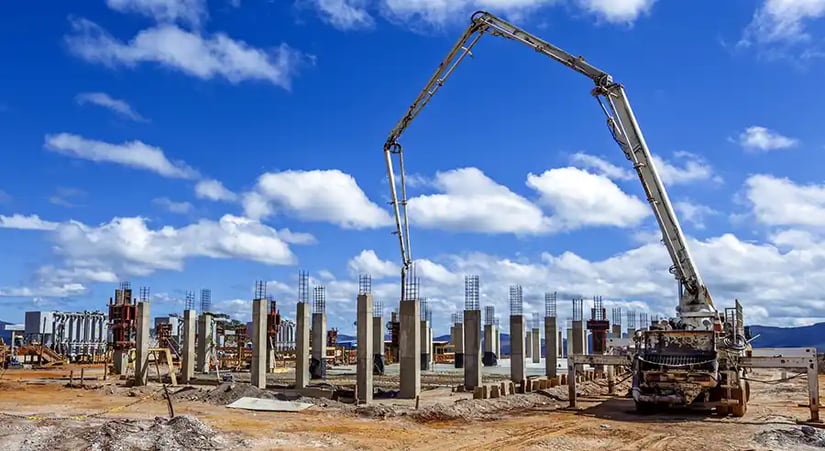
The final delivery leg is where logistics can fail even well-planned projects. AI data center sites routinely require capabilities that fall outside standard carrier models — and no two sites look alike. Security protocols, access constraints, unload windows, and equipment requirements vary from project to project, which means the logistics model has to adapt to the job rather than the other way around.
Common requirements include:
Weekend and after-hours delivery – Construction windows, commissioning schedules, and operational maintenance do not run strictly Monday through Friday. The ability to execute a Saturday delivery or respond to a Sunday emergency is often a project requirement, not a premium add-on.
Same-day and expedited response – GPU shipments, critical spare parts, and time-sensitive hardware replacements cannot wait for the next scheduled run. When uptime or construction sequencing is at stake, expedited logistics response has to match the urgency.
Liftgate and specialized equipment – Not every delivery point at an active data center site has a loading dock. Liftgate-equipped trucks, flatbed and step-deck capacity for oversized loads, and handlers who understand what they're moving are essential when the freight is irreplaceable.
Active construction site coordination – Delivering to a secure build site means working in real time with crane operators, site supervisors, and security teams. That takes experience, communication flexibility, and an operational model built around variability – not rigid delivery windows.
As Built In noted in its 2026 data center outlook, the ability to execute on schedule may be as important as having the land or capital to build. Logistics is a direct variable in that equation.
How Does Logistics Support the Full AI Data Center Lifecycle?
The logistics need doesn't end when a facility goes live. AI data centers operate on aggressive technology refresh cycles – servers, GPUs, and networking equipment are regularly upgraded to keep pace with evolving AI workloads. Goldman Sachs Research projects data center demand to grow roughly 50% by 2027, which means these facilities will be in a near-constant state of expansion, upgrade, and operational support.
That reality requires logistics support across three phases: construction and core infrastructure delivery, technology deployment and refresh cycles, and ongoing operations including spare parts distribution, emergency response, and decommissioning. Working with fragmented carriers across those phases introduces handoff risk, visibility gaps, and coordination overhead that mission-critical environments cannot absorb.
Operators and owners who establish a single integrated logistics partner early – one who knows the site, understands the security requirements, and can scale services as the facility evolves – eliminate a significant source of project risk.
Why Averitt Is Built for This Industry
Averitt has been supporting complex, high-value supply chains for over 55 years. Today that experience is applied directly to the AI data center market, with services designed around what these projects actually require: flatbed and specialized transport for oversized power and cooling infrastructure, secure warehousing and job-site staging, same-day and weekend delivery capabilities, and a single integrated point of contact across every phase of the project lifecycle.
Whether the need is LTL for coordinated equipment deliveries, truckload capacity for full construction loads, or expedited response for time-critical freight, Averitt's asset-based network is built to handle what AI data center projects actually demand.
From the first component delivered to a construction site to the last piece of hardware cycled out in a refresh, Averitt is built to keep AI data center projects moving.
Learn more about Averitt's AI Data Center logistics capabilities at Averitt.com/AIDataCenters.
Get the full picture. Enter your email below to download our AI Data Center logistics capabilities guide — and see how Averitt supports projects from groundbreak to go-live.