.png?width=542&height=179&name=PNG-Averitt%2055%20Years%20RED%20ODFIP%20(1).png)


As supply chains move into 2026, the conversation has shifted. Shippers are no longer reacting to constant disruption—but they aren’t operating with full confidence either. Instead, planning decisions are being made with greater discipline, tighter assumptions, and far less margin for error.
To better understand how organizations are approaching the year ahead, Averitt surveyed and interviewed more than 1,000 supply chain, logistics, and procurement professionals across North America in late 2025. The result is a data-backed view into how shippers are thinking about volume, tariffs, and execution as conditions continue to evolve.
Confidence Remains—But It’s Measured
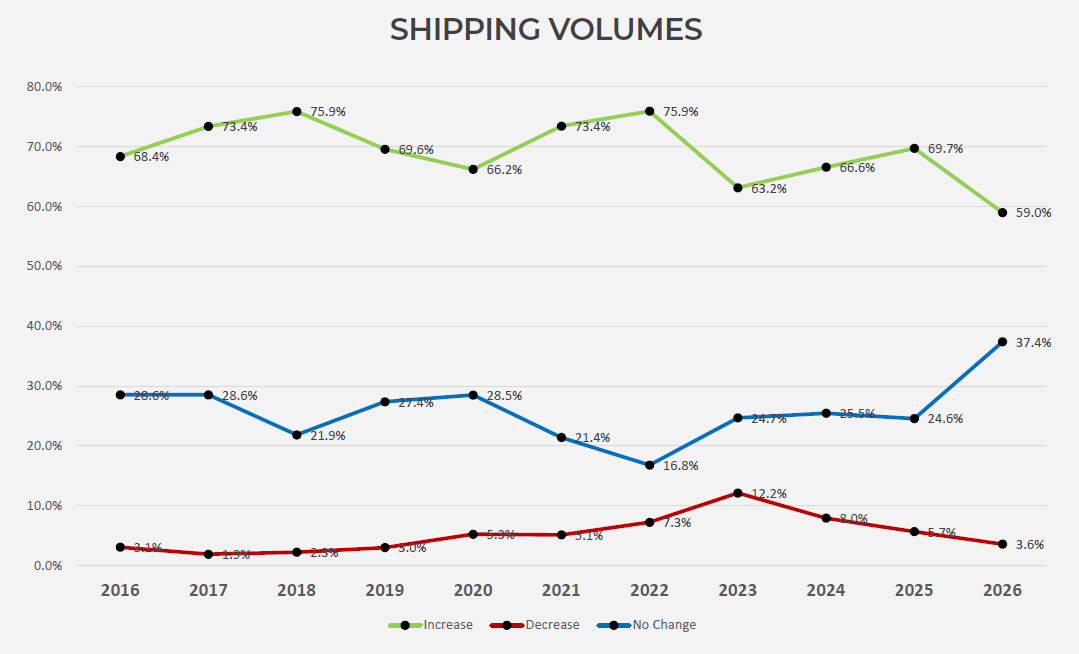
One of the most telling indicators each year is how shippers expect their shipping volumes to change. For 2026, the results show a clear recalibration.
While a majority of respondents still expect volumes to increase, positive sentiment fell to its lowest level in the past decade. At the same time, the number of shippers expecting no change rose sharply, while those anticipating declines fell to near-historic lows.
Rather than signaling retrenchment, the data points to conditional confidence—a willingness to move forward, paired with a reluctance to assume best-case scenarios.
Below: Shipper Projections For Volumes In 2026
Tariffs Continue to Shape Planning Decisions
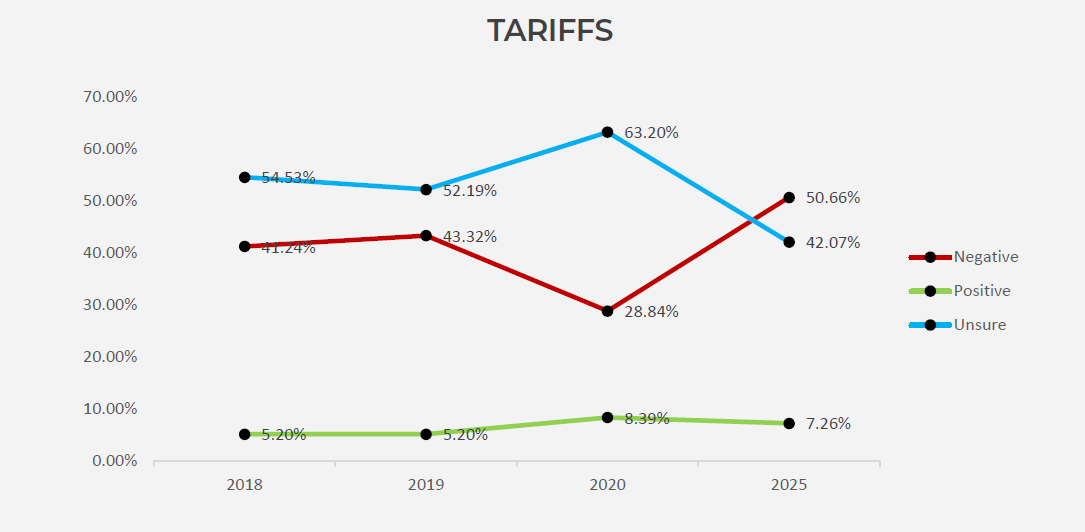
Tariffs remain a significant factor influencing that cautious posture. When asked about the impact experienced during 2025, more than half of respondents reported a negative effect on their operations.
Importantly, tariffs did not drive widespread pessimism about demand. Instead, they are increasingly viewed as a structural condition—one that affects how shippers plan, source, and execute rather than whether they expect business to continue.
This mindset shift helps explain why volume expectations have moderated without triggering a surge in negative sentiment.
Below: Impact of Tariffs Over The Course of the Year
Less Slack Means More Intentional Strategy
Across the survey results, one theme emerges clearly: shippers are planning with less room for error.
Tighter capacity, greater compliance scrutiny, and ongoing cost pressure are pushing organizations to be more deliberate about how they secure transportation, manage inventory, and build flexibility into their networks. Stability, reliability, and execution discipline are increasingly prioritized over opportunistic savings.
Download the Full White Paper
These insights—and more—are explored in depth in Averitt’s 2026 State of the North American Supply Chain white paper. The report breaks down:
-
How shippers are recalibrating volume expectations for 2026
-
The role tariffs continue to play in shaping strategy
-
Why execution risk has overtaken demand risk
-
How organizations are adapting with more intentional planning
Complete the form below to access the full white paper and gain a deeper understanding of how shippers are preparing for the year ahead.