The LTL shipping industry is busier than ever. As a result, space within trucks is also tighter than ever before. This places added responsibility on the shoulders of shippers and carriers to ensure that each shipment is packaged as safely and efficiently as possible.
Improper packaging can lead to massive headaches for everyone in the supply chain. From causing damage to your freight and that of others, lapses in secure packaging can even lead to workplace injuries.
The good news is, there are a few key steps you can take to not only help ensure that your freight arrives safely, but also solidify your position as a preferred shipper with your carrier of choice.
1.) Proper Palletizing
 As obvious as it sounds, it all begins with the right foundation. If you’re using pallets, make sure they’re up to the job. Pallets should be made of wood (not plastic or corrugated) and covered with a good deck of boards.
Four-way access is preferred, as it allows the greatest flexibility for loading and storage. They should also be free of any protruding nails. A standard “stringer” pallet has a loading capacity of around 2,800 pounds and should be stacked to a maximum height of 84 inches. It's best to keep freight within the perimeter of the pallet to protect from adjacent freight or equipment.
Pallets must be sufficiently constructed to support a double-tiered load that can accommodate equal weight and distribution. Additionally, the deck of the pallet should be built so that a forklift will not damage the freight resting on top.
2.) Accurate Labeling
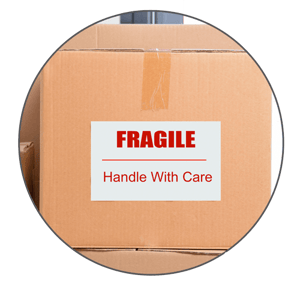 Proper labeling minimizes handling and dramatically improves efficiency. Which is why EVERY box in your shipment must be properly labeled prior to pickup. In addition, you should label the pallets as well, in case pieces become separated in transit.
Labels should clearly indicate the name, phone number and address of both the shipper and consignee (including a shipping date may also help the carrier.) Labels should be clear, easy to read, and placed on the top of each box (but not over the seam).
Any additional labels that describe special handling requirements – like “Top Heavy,” “Fragile,” “COD,” etc. – should be marked on at least two adjacent outside panels.
3.) Sound Stacking
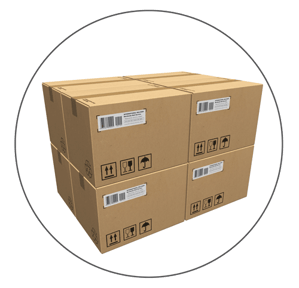 Improper stacking not only increases the chance of a load coming undone, it can also weaken the integrity of cardboard cartons by as much as 60%. Boxes should be stacked squarely on the pallet – lined up corner-to-corner with no overhang.
It’s fine to stack near the edges, but under no circumstances should boxes extend over the edge. Overhang not only makes cartons vulnerable to damage, it also decreases their strength by as much as one third.
Don’t use an interlocking pattern, as this can further weaken the cardboard. Distribute the weight evenly and do your best to make sure the top surface is flat.
4.) Secure Crating
 If shipping fragile or easily damaged items, crating is a flexible and affordable option, as they can be built to accommodate both standard and non-standard dimensions. But it’s important to follow a few key guidelines to ensure that your shipment arrives safely.
To begin with, keep fragile and non-fragile items separate – to minimize possible damage in transit. Fragile items should be wrapped in protective material, and crates should be packed as full as possible in order to minimize the possibility of movement during transit. All movable items must be blocked or braced to prevent shifting in transit.
Crates must also be built so that slats are close enough to protect the contents and prevent any items from protruding outward. Additionally, a crate must include three-way locking corners that are joined by nails or fasteners.
Strengthening your crates with additional supports will further protect your shipment from damage. For example, two diagonal boards on each side can make a crate nearly 12 times stronger than a non-reinforced crate.
5.) Snug Wrapping
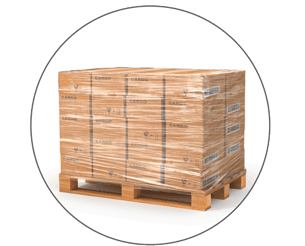 Using stretch wrap around your fully stacked pallet is the best way of ensuring that your shipment remains as secure as possible during all phases of transit.
Starting from the bottom, wrap around boxes in an upward direction, overlapping each layer of wrap by at least 50%. Once you reach the top, stretch the wrap in a crisscross pattern diagonally over the corners, then spiral back to the bottom.
Finish by wrapping a three-inch overlap with the pallet itself, so that the cartons are secured to the pallet, and the entire shipment feels like one solid piece. For even greater strength and securement, use banding in all four directions. Depending on the weight of the load, choose either metal, plastic or nylon – and make sure it’s as tight as possible.
Additionally, add protective packaging to surfaces or materials that are easily scuffed or could be damaged if contact is made from other freight, securement tools, or equipment
A little added preparation helps ensure that LTL shipments arrive on-time and intact. This will help in eliminating costly delays, headaches and fees. At Averitt, we work with shippers to keep them informed of the latest methods to reduce damage and avoid losses. If you have any questions about freight care or preparation, contact our Loss Prevention team at lossprevention@averitt.com.
For more information about proper freight packaging, download our free freight protection guide and check out the video below.

When freight is handed off to Averitt, we load it like we own it with the goal of delivering each shipment on time, on target, and intact. In order for us to be successful, there are steps required of the shipper to help their freight move without unnecessary delay or damage. The proper completion of the bill of lading, address and handling labels, as well as proper packaging will result in a quality finish. Averitt has a fantastic freight protection guideline resource available online or through your transportation specialist to assist with the basic preparation of freight based on the National Motor Freight Classification publication. The NMFC is the freight classification publication provided by the National Motor Freight Transportation Association, which not only identifies what classification will apply for pricing and cargo claim liability, but also outlines minimum packaging requirements by commodity. It further outlines what is necessary to protect the different sizes, shapes, and weights of freight that travel together within the same trailer while experiencing the normal rigors of less than truckload transportation. The rigors of transportation begin the moment we take off into traffic. The inertia will push freight to the rear of the trailer, so our platform associate will attempt to stack right, block in, and secure with strapping or bracing. Let's take a look at the effect this rigger has which increases the likelihood for damage to any falling freight and anything else around it. How the freight is packaged by the shipper will be influential to if any damage occurs. Let's look at the moments following the fall of those tires and see what happens as we drive over a pothole, railroad track or speed bump. Keep your eye on the top two loaded pallets and the bounce that is generated. This can happen and over again as we move through the city or over the road resulting in continual impact to the freight underneath. Packaging is essential to protect shipments as they bounce within the trailer. The force of the repetitive vertical impact as shipments are transported around the corner or hours to the next point could result in poorly built crates falling apart, plastic wrap loosening from the shipment, or the perception of damage from dented exterior cardboard containers. That's why we use cardboard as required under stacked pallets, pails, drums. It will absorb the vibration and cushion any bounce to help protect the floor loaded freight and may be an easy way for the shipper to beef up their packaging with very little additional cost. We also have to be cognitive of the weight of top heavy freight. Let's see why. After we recoup the load and continue our drive, we continue to see the effects of vibration. Did you know that vibrating or bouncing top loaded freight creates increased compression g force on floor loaded freight as it moves? It can be increased as much as ten times over the rear axle. That means these truck tires weighing a hundred and ten pounds each can produce compression weight of up to five thousand five hundred pounds when top loaded. Take a look at the floor loaded freight as we move down the road and see if it can survive the five hundred and fifty pounds stacked on top. I guess you saw that one coming. Two additional items we can take away from this failure is one, a crate is not a crate just because it's called a crate. Use Averitt's freight protection guidelines mentioned at the beginning of this video to strengthen packaging or ask your transportation specialist to get our loss prevention team involved. Secondly, we must make every effort to reduce the effect of vibration and load shift by filling all voids and trailers to provide stability to the packaging. We do this by using upright pallets or non unitized freight to fill the gap, meaning these items will come in contact with your freight. Let's also take this time to show the reason why we use cardboard under loose drums. The drum with a sheet of dunnage under it remains within its footprint while the drum without it slides to the rear of the trailer. If you notice, there is a hazardous label on the drum so this could make any one of us have a bad day. It is best to palletize drums on a solid bottom pallet with cardboard underneath it. Keep your eye on the television loaded to the side of the wall. It is a challenge to protect single loose pieces such as this television during the normal rigors of transportation, so solid exterior and interior packaging is important for any loose piece. As we continue on our journey, the wrap on these filters become loose and they begin to fall. If you look closely, you'll see crushing to the filters on the bottom of the pallet. Oh, yeah, we can't ignore the water heater shifting. Takeoffs, turns, curves, and continued vibration will take its toll on this freight. Now imagine being the one having to present this to our mutual customer at delivery. Sometimes we may load a trailer to protect from stacking by using pallet decks. This is the right thing to do, however freight stacked on a deck can still be damaged. In this case, it appears we may be lucky because the roof of the trailer is helping keep the shipments from falling over. However, there is still potential damage within the container due to the intense rocking motion. No, there it goes, down for the count. Also notice the box to the left that was damaged from the banding cutting into it while rocking front to rear. Product damage may also have occurred. Just five more minutes down the road and we see more falling freight. Earlier, we observed why it's important to package well, block freight in and secure it keeping in mind that the energy in a takeoff will push freight to the rear of the trailer. Likewise, we have to be aware that all braking will result in freight being pushed to the nose of the trailer. Observe as we see what the normal rigor of transportation of hard braking will do to this loose TV. Now let's zoom out and see what all of this freight does. Did you see the impact all the freight experienced? If not protected properly, commodities can experience preventable damages as a result of the rigors of transportation all freight will experience. These rigors can be protected from through adequate internal and external packaging, proper loading disciplines, and educational tools like this video and our freight protection guidelines. Commitment is that we will take ownership in a way that separates us from our competition. We must load it like we own it and partner with our shippers to provide a quality start as we exhibit the power of one to our mutual customers.

.png?width=542&height=179&name=PNG-Averitt%2055%20Years%20RED%20ODFIP%20(1).png)